




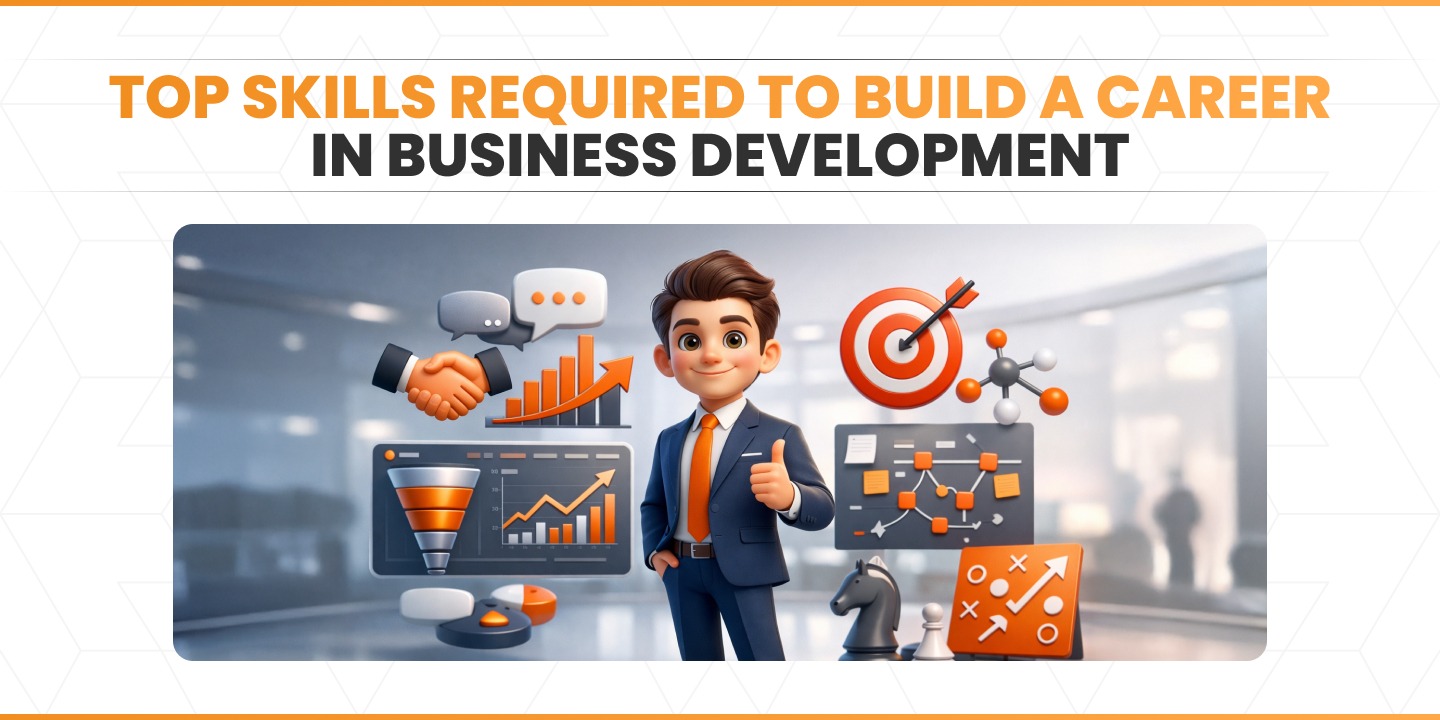
Business development is no longer limited to sales targets and cold calls.
Today, it is a strategic role that connects marketing, sales, partnerships, and long-term growth planning.
For students, freshers, entrepreneurs, and working professionals, business development offers strong career opportunities across industries. With the right skill set and structured learning, you can build a stable and future-ready career.
In this blog, you will learn:
- What business development is and why it matters
- The top skills required for a successful business development career
- How professional training can accelerate your growth
What Is Business Development and Why It Matters
Business development focuses on identifying growth opportunities for an organization. It involves understanding market needs, building relationships, and converting ideas into revenue.
Companies rely on business development professionals to:
- Identify new clients and markets
- Build long-term partnerships
- Improve customer retention
- Support overall business growth
Because of this increasing demand, enrolling in a professional Business Development Management Course has become a smart career move for many learners.
Core Skills Needed for a Successful Business Development Career
1. Communication Skills
Clear and confident communication is the foundation of business development. Professionals must explain ideas, pitch solutions, and build trust with clients.
Strong communication includes:
- Confident verbal communication
- Professional email and proposal writing
- Active listening
- Presentation and pitching skills
These skills are a major focus in structured business development courses, helping learners become client-ready.
2. Sales and Negotiation Skills
Business development professionals are responsible for converting opportunities into results. This requires a strong understanding of sales processes and negotiation techniques.
Key abilities include:
- Identifying customer pain points
- Presenting value-based solutions
- Handling objections professionally
- Closing deals with confidence
A practical Business Development Management Training program helps learners practice real-world sales scenarios.
3. Market Research and Analytical Thinking
Before offering solutions, you must clearly understand the market.
Business development involves analyzing:
- Target industries
- Competitor strategies
- Customer behavior
- Current market trends
Analytical thinking enables data-driven decision-making instead of assumptions. These skills are taught in detail at a professional Business Development Training Institute.
4. Relationship-Building Skills
Long-term business growth depends on strong relationships, not one-time deals. Business development professionals act as a bridge between the company and its clients.
Important relationship-building skills include:
- Networking
- Client follow-ups
- Trust-building
- Conflict resolution
Practical business development classes often include role-plays and communication exercises to strengthen these abilities.
5. Strategic Thinking and Planning
Business development is not only about execution—it requires planning and foresight.
Professionals should be able to:
- Identify new growth opportunities
- Create expansion strategies
- Align sales and marketing efforts
- Support management decision-making
A well-designed Business Development Management Course trains learners to think strategically rather than tactically.
6. Digital Tools and CRM Knowledge
Modern business development is technology-driven. Professionals rely on digital tools to manage leads and track performance.
Commonly used tools include:
- CRM software
- Email automation platforms
- Data dashboards
- Basic digital marketing tools
Hands-on business development training helps learners gain confidence with industry-relevant tools.
7. Adaptability and Problem-Solving Skills
Markets evolve rapidly, and client expectations change frequently. Business development professionals must adapt quickly and solve problems effectively.
You should be able to:
- Respond to changing customer needs
- Handle unexpected challenges
- Adjust strategies when required
These skills are developed through case studies and practical training sessions during professional business development programs.
Why Learning Through a Professional Course Matters
While self-learning is helpful, structured learning accelerates career growth. A professional Business Development Course provides clarity, practice, and expert guidance.
Benefits of formal training include:
- Industry-oriented curriculum
- Real-world case studies
- Practical assignments
- Mentorship from experienced trainers
At institutes like DIT Academy, students in Ahmedabad and Bhuj gain exposure to real business scenarios, not just theoretical concepts.
Career Opportunities After Learning Business Development
Business development skills are applicable across multiple industries, offering flexibility and long-term growth.
Popular job roles include:
- Business Development Executive
- Business Development Manager
- Sales Manager
- Relationship Manager
- Growth Strategist
Entrepreneurs also benefit by applying these skills to scale their own businesses.
Who Should Learn Business Development Skills
Business development training is ideal for:
- Students planning a corporate career
- Freshers seeking practical, job-ready skills
- Working professionals aiming for promotion
- Entrepreneurs expanding their businesses
Choosing a reliable Business Development Training Institute ensures guidance at every career stage.
How DIT Academy Supports Business Development Learning
DIT Academy focuses on skill-based and industry-relevant education. The training approach emphasizes clarity, confidence, and career readiness.
Students benefit from:
- Practical learning methods
- Real-life business examples
- Expert guidance
- A supportive learning environment
With campuses in Ahmedabad and Bhuj, learners get local access to quality business development education.
Conclusion
Building a career in business development requires more than motivation. It demands strong communication skills, strategic thinking, market understanding, and practical experience.
By enrolling in a structured Business Development Management Training program, learners gain confidence, clarity, and job-ready skills. Whether you are a student, fresher, or professional, business development skills can help you grow in any industry.
If you are serious about building a future in business development, the journey starts with learning the right skills the right way.
No specific degree is required. Practical skills and professional training matter more than academic background.
Yes. With proper training, freshers can start as executives and grow quickly.
Basic skills can be learned within a few months through a structured business development course.
Yes. It helps entrepreneurs improve sales strategies, partnerships, and business growth.
You can explore professional business development classes at institutes like DIT Academy.

